

Parts sourcing
Parts for Restoration Projects
A restoration is a parts list that grows as the car comes apart. We work with restorers as one point of contact for the whole list — finding, tracking and delivering parts over the life of the project.
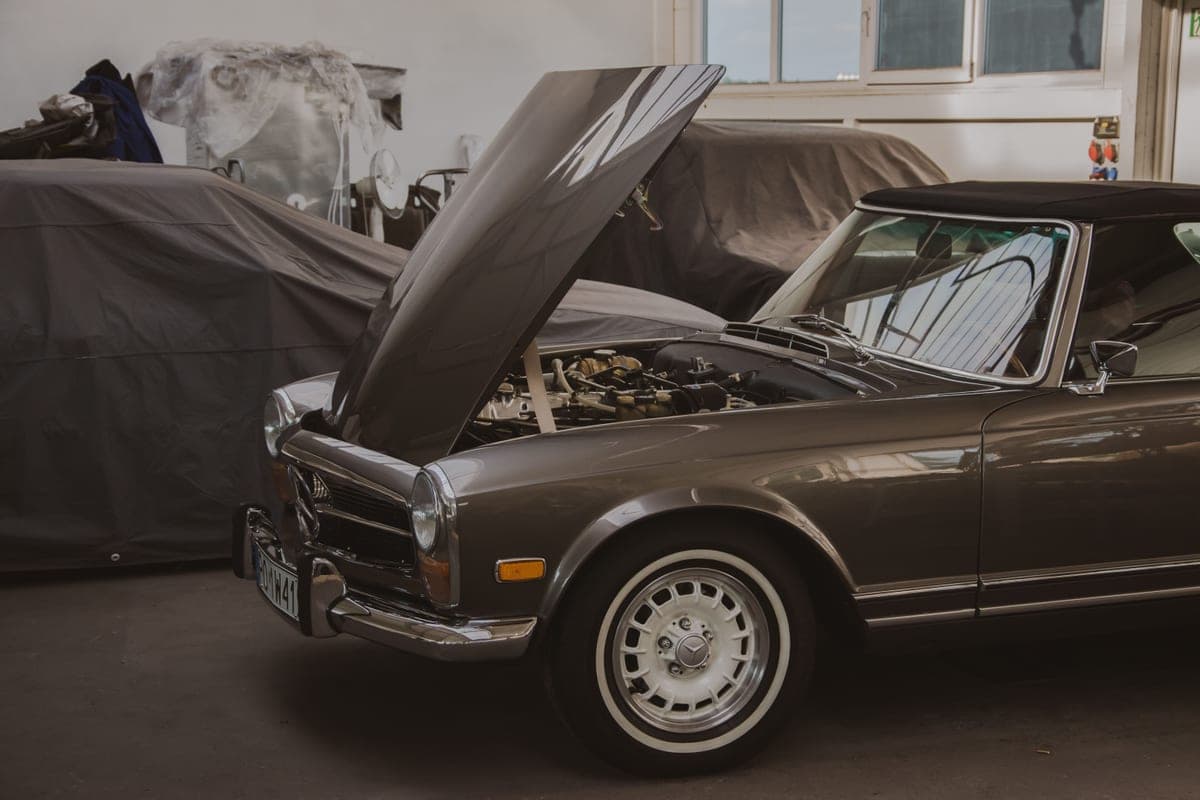
How project-based sourcing works
Restoration sourcing is not a series of unrelated requests. It is one vehicle, one restorer and a list that changes every week as the strip-down reveals what can be saved and what cannot. We work on that basis: you send the chassis number and the list as it stands, and we keep a running record of what has been found, what is on order, what is waiting on a heritage-programme batch and what is still open. When the list grows, you add to it; you do not start again.
- Send the chassis (VIN) number, engine and body numbers, photographs of the identification plates and your current parts list.
- We confirm identification for each item — variant, period and any known reproduction or supersession history.
- We search heritage programmes, specialist suppliers, new-old stock and, where you tell us it is acceptable, the used genuine market.
- You receive availability, category (new genuine, new-old stock, used genuine, remanufactured or reproduction), price and lead time per item.
- Parts are ordered and delivered as they become available, or held and consolidated if that suits the project.
What restoration parts come from where
- Body sections and panels — heritage remanufactures, new-old stock or good used sections. See classic car parts.
- Brightwork and trim — new-old stock and used, occasionally reproduction; described as which.
- Mechanical components — specialist suppliers, heritage programmes and new-old stock. See mechanical components.
- Electrical items — switches, gauges, looms and lamps, mostly new-old stock or used.
- Fasteners, seals and small parts — often still supplied, sometimes under consolidated numbers; the items that delay a rebuild if they are left to last.
Honesty about what can and cannot be found
Restorers know that some parts do not exist any more. What they need from a sourcing partner is a quick, definite answer on each item so the project plan can adapt — which panels to repair rather than replace, which trim to have re-plated, which components to send for remanufacture. We give that answer. When a part is obsolete in every market we say so and set out the alternatives, described as exactly what they are.
Send us the chassis number, photographs of the plates and the list as it stands. We'll come back with what we can find, item by item.
Modern classics and specialist restorations
Restoration increasingly means cars from the 1980s to the 2000s, where the manufacturer's electronic catalogue still exists but stock does not. For these vehicles the search runs through other markets and heritage programmes, and body panels in particular can still be found new. For low-volume and specialist vehicles — competition cars, coachbuilt bodies, limited editions — see hard-to-find parts. For structural repair information on a restoration, see manufacturer repair methods.
Working with restorers, not owners
REMCAM is trade only. We work with the restoration business, not the vehicle's owner, so that identification, approvals and deliveries run through one professional contact. If you are an owner planning a restoration, your restorer can send us the list.
Building the list
The most useful thing a restorer can do at the start of a project is send us a list, however incomplete. A list at strip-down stage — even one that says 'probably' against half the items — lets us begin identification and availability checks on the long-lead parts while the car is still being assessed, and tells us which categories of part matter most for this build.
- Group the list by area of the car: body and structure, brightwork and trim, mechanical, electrical, interior.
- Mark each item as 'definitely needed', 'probably' or 'if available' so we search in the right order.
- Note your preference per item: new genuine, new-old stock, used genuine or reproduction.
- Tell us the target completion date, if there is one, so long-lead items are started first.
Sequencing and budgeting
Because restoration sourcing runs over months, we keep the list live: what has been found and quoted, what is on order and when it is due, what is waiting on a heritage-programme batch, and what is still open. You can ask for the current position at any time. Items can be ordered as found or held and consolidated to suit the workshop's schedule and the project's budget. Long-lead items — panels from a heritage programme, made-to-order castings — are flagged early so they do not become the critical path at the end.
When the list changes
It always does. A floor that looked sound turns out to need sections; a gearbox that was going to be rebuilt needs a casing. Send the change and we add it to the list; nothing needs to be re-explained. For the structural repair information a restoration may need, see manufacturer repair methods.
Restoration Parts: frequently asked questions
Can you manage the parts list for a whole restoration?
Yes. We keep a running record of what has been found, what is on order and what is still open, so you add to the list rather than starting again with each request.
Can parts be held and delivered together?
Yes. Tell us whether you want each part as it is found or a consolidated delivery, and we will arrange it that way.
Do you source reproduction parts?
Only where nothing original survives, and always described as reproduction. New genuine, new-old stock and used genuine come first.
Do you work with restorations of modern classics?
Yes. For 1980s to 2000s vehicles the manufacturer's catalogue usually still exists; the search runs through other markets, heritage programmes and new-old stock.
Can't find the part? Let us find it.
Send us the registration, VIN or part number and we'll search our sourcing network.