

Parts sourcing
Obsolete, Discontinued and No-Longer-Available Parts
'NLA' on the dealer screen is where most searches stop. It's where ours start. We look for discontinued genuine parts through the routes that still exist — and tell you honestly when none do.
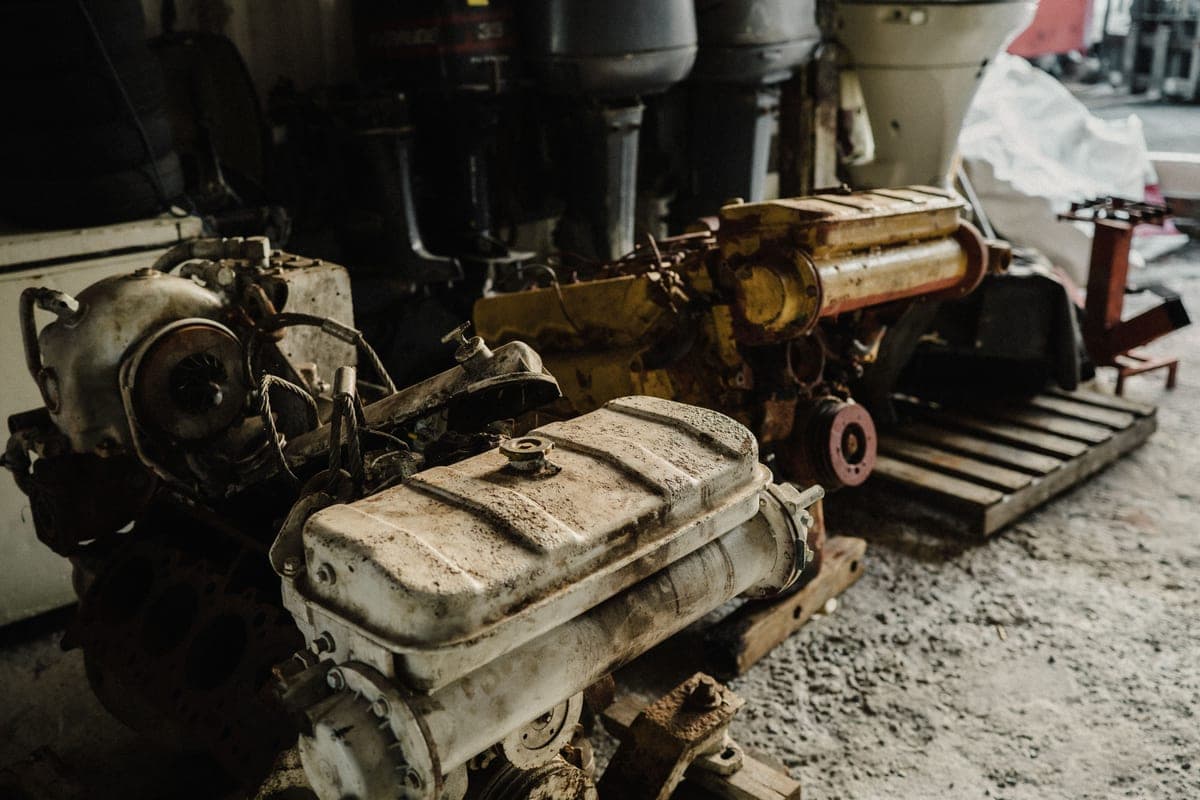
Obsolete, discontinued, NLA, superseded — what the terms mean
The words are used loosely in the trade, but they describe different situations and each one has a different sourcing route.
- No longer available (NLA) — the manufacturer's UK parts system shows the number as not supplied. It may still be stocked in other markets, or exist as new-old stock.
- Discontinued — the manufacturer has stopped producing the part. Remaining stock may exist somewhere in the world, but it will not be replenished.
- Obsolete — the part belongs to a vehicle the manufacturer no longer supports at all. Sourcing relies on heritage programmes, specialist remanufacturers and the used and new-old-stock market.
- Superseded — the part number has been replaced by a newer number, often for a redesigned or consolidated part. The part is not obsolete; you simply need the current number.
The first thing we do with any 'NLA' request is establish which of these applies, because a superseded part is a ten-minute job and a genuinely obsolete one is a search.
Where discontinued genuine parts come from
There are only so many places a discontinued genuine part can be. We work through them in order, and we describe each route generically here because the right one depends entirely on the vehicle.
- Other markets. Manufacturers withdraw parts from the UK catalogue before they withdraw them everywhere. A part that is NLA here can be a routine item in mainland Europe, the Gulf, Australia or Japan.
- Manufacturer heritage and classic programmes. Several manufacturers run programmes that reintroduce or remanufacture parts for older models. Availability comes and goes as batches are produced.
- Genuine new-old stock. Unused genuine parts still in manufacturer packaging, held by specialist suppliers or acquired when a dealer or distributor clears stock.
- Used genuine parts. For structural, trim and some mechanical items a good used genuine part is often the only route, and for a restoration it may be the preferred one.
- Remanufacture. A last resort for items nobody holds — electronic modules, castings, rubber and trim. We tell you clearly when this is the only option and what it involves.
Honest answers on availability
Not every discontinued part can be found, and the worst outcome for a workshop is a search that never closes. When we take on an obsolete-parts request we come back with a definite answer: found, with a source, price and lead time; or not found, with the alternatives we'd suggest. That lets you talk to your customer about the repair — or the restoration — with real information rather than a promise.
Send us the registration or VIN, the part number if you have one and a photograph of the part. We'll confirm whether it is superseded, NLA in the UK only, or genuinely discontinued, and search accordingly.
Common obsolete-parts requests
The requests we see most often for discontinued lines fall into predictable groups, and they are worth listing because they show where the search usually goes.
- Body panels and glazing for models more than ten to fifteen years old — often still supplied in other markets or via heritage programmes. See body panels.
- Interior trim and mouldings in a specific colour or finish — usually new-old stock or used.
- Electronic control modules and sensors for a specific model year — new-old stock first, remanufacture second.
- Cooling, fuel and exhaust components for classic and performance vehicles — heritage programmes and specialist suppliers. See classic car parts.
- Fasteners, clips and brackets that are individually trivial and collectively stop a job — often still supplied under a different, consolidated number.
Obsolete parts for restoration projects
A restoration is a sequence of obsolete-parts requests spread over months. We work with restorers on that basis — one point of contact, a running list of what has been found and what is still open, and honest advice about which items are worth waiting for versus sourcing used. See restoration parts sourcing. If the vehicle is a low-volume or specialist model, the hard-to-find parts page covers how we identify parts for vehicles outside the mainstream catalogue.
How a supersession search works
When a manufacturer replaces a part number the old number stays on diagrams, in estimating systems and on old stock for years. The dealer screen reports the old number as not available and the search stops there. We do the opposite: we follow the number forward.
- Confirm the original number against the VIN, so we are tracing the right chain.
- Follow each supersession in order — a number may have been replaced several times, sometimes by a kit or a consolidated part that covers more than one application.
- Check the current number's availability in the UK and, if it is not stocked here, in other markets.
- Confirm that the current part is a direct replacement for your application. Occasionally a supersession changes the part's fitment or requires additional items; we tell you if so.
A surprising share of parts reported as discontinued are found this way, within a day, without leaving the manufacturer's own network. It is the first thing we check because it is the cheapest and quickest route when it applies.
Planning a repair around a genuinely obsolete part
When a part is obsolete in every market, the useful thing we can do is give you a definite answer quickly enough to plan around it. Typically that means one of the following, described plainly so you can put it to your customer or the insurer:
- A used genuine part with its condition and origin described — often the best answer for trim, castings and body sections.
- A genuine part for a related application that fits with a documented modification — only where the manufacturer's own supersession or service information supports it.
- Repair rather than replace — for some panels and castings a competent repair is more sensible than a fruitless search, and we will say so.
- Remanufacture — for electronic modules, rubber and small mouldings where nothing else exists, with a clear explanation of what is involved and how long it takes.
We would rather tell you on day one that a part is gone than keep a request open for weeks. A closed request with a realistic alternative is worth more to a workshop than an optimistic 'still looking'.
Obsolete & Discontinued Parts: frequently asked questions
The dealer says the part is NLA. Does that mean it no longer exists?
Not necessarily. NLA usually means the UK parts system no longer supplies that number. The part may still be stocked in other markets, exist as new-old stock or have been superseded by a newer number. We check all three before calling a part obsolete.
Are discontinued car parts more expensive?
Often, because supply is limited and the part may travel further. We quote the actual price from the actual source before you commit, so there are no surprises.
Will you supply a used genuine part for a discontinued line?
If you tell us a used genuine part is acceptable, we will include that route in the search and describe the part's condition and origin when we quote. We never substitute a used or remanufactured part for a new one without telling you.
What is the word for a part that is no longer available?
The trade uses NLA (no longer available), obsolete, discontinued and superseded — they describe different situations, and the sourcing route differs for each. See the definitions at the top of this page.
Can 3D printing replace a discontinued part?
For some non-structural trim, brackets and clips, remanufacture — including additive methods — can be a last resort. It is not suitable for safety-critical or structural components, and we only suggest it when no genuine route exists.

Can't find the part? Let us find it.
Send us the registration, VIN or part number and we'll search our sourcing network.